Making HR Feel Less Like Administration
As Small Businesses Grow, HR Becomes Increasingly Fragmented.
Employee Records Live In One System. Time Tracking Lives Somewhere Else. Payroll Requires Another Tool. Compliance Becomes A Spreadsheet. And Managers Are Left Connecting The Dots Themselves.
OrbitHR Was Designed Around A Simple Idea: HR Should Work As One Connected System.
The Product Combines Essential HR Operations With AI-Powered Insights, Customizable Workflows, And Global Compliance Support—Without Introducing The Complexity Typically Associated With Enterprise HR Software.
Growing teams shouldn't need enterprise complexity. SMBs need many of the same HR capabilities as larger organisations, but often have smaller teams, fewer HR specialists, and less time to manage complicated systems.
This led to three core product principles:
Complex HR rules should stay behind a simple interface.
A change in one part of the system should make sense everywhere else.
AI should surface useful actions and risks not simply add another dashboard.
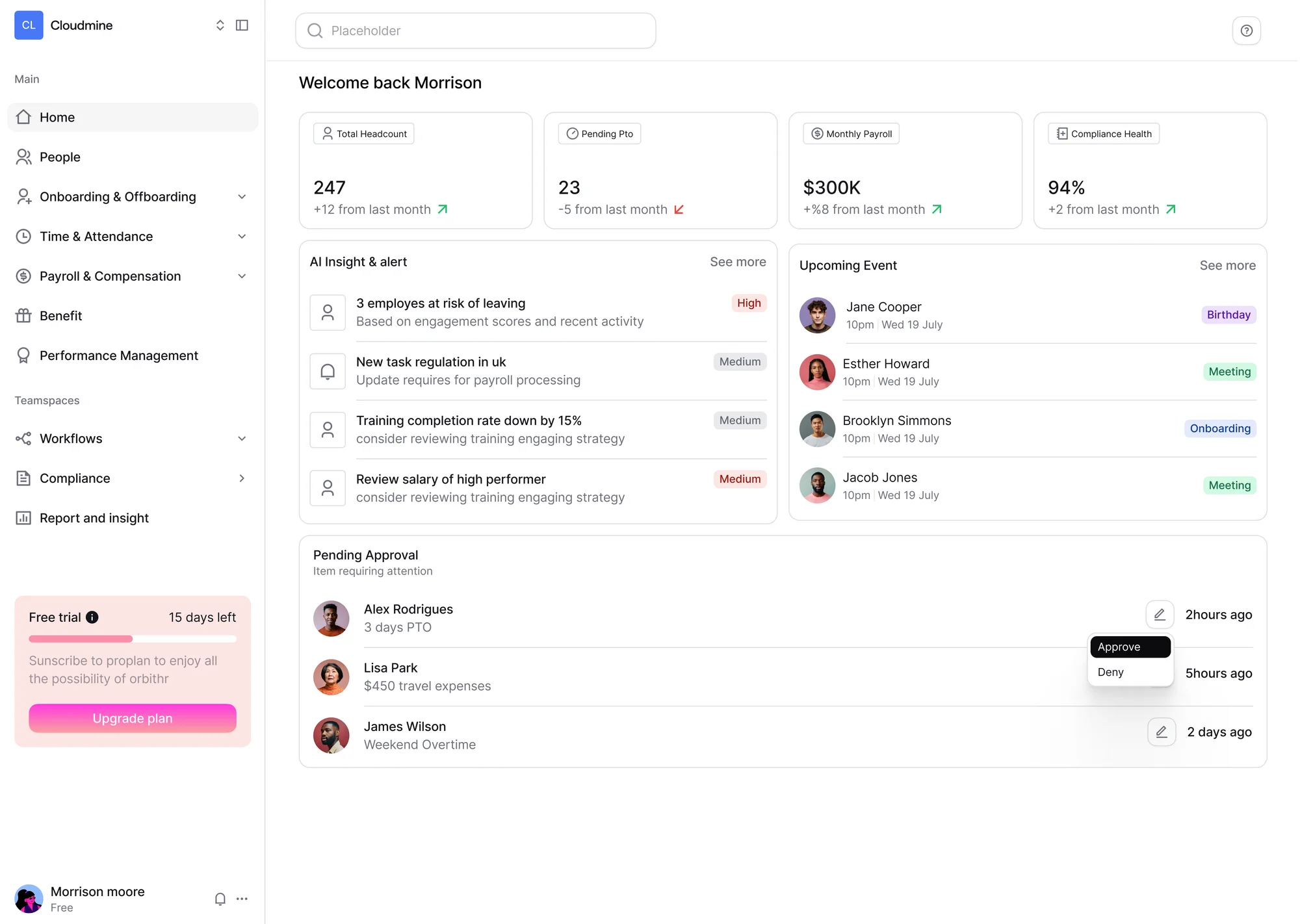
Designing around the moments that matter. Instead of treating OrbitHR as a collection of HR modules, I structured the product around the workflows HR teams and employees repeatedly perform.
The experience is organised around:
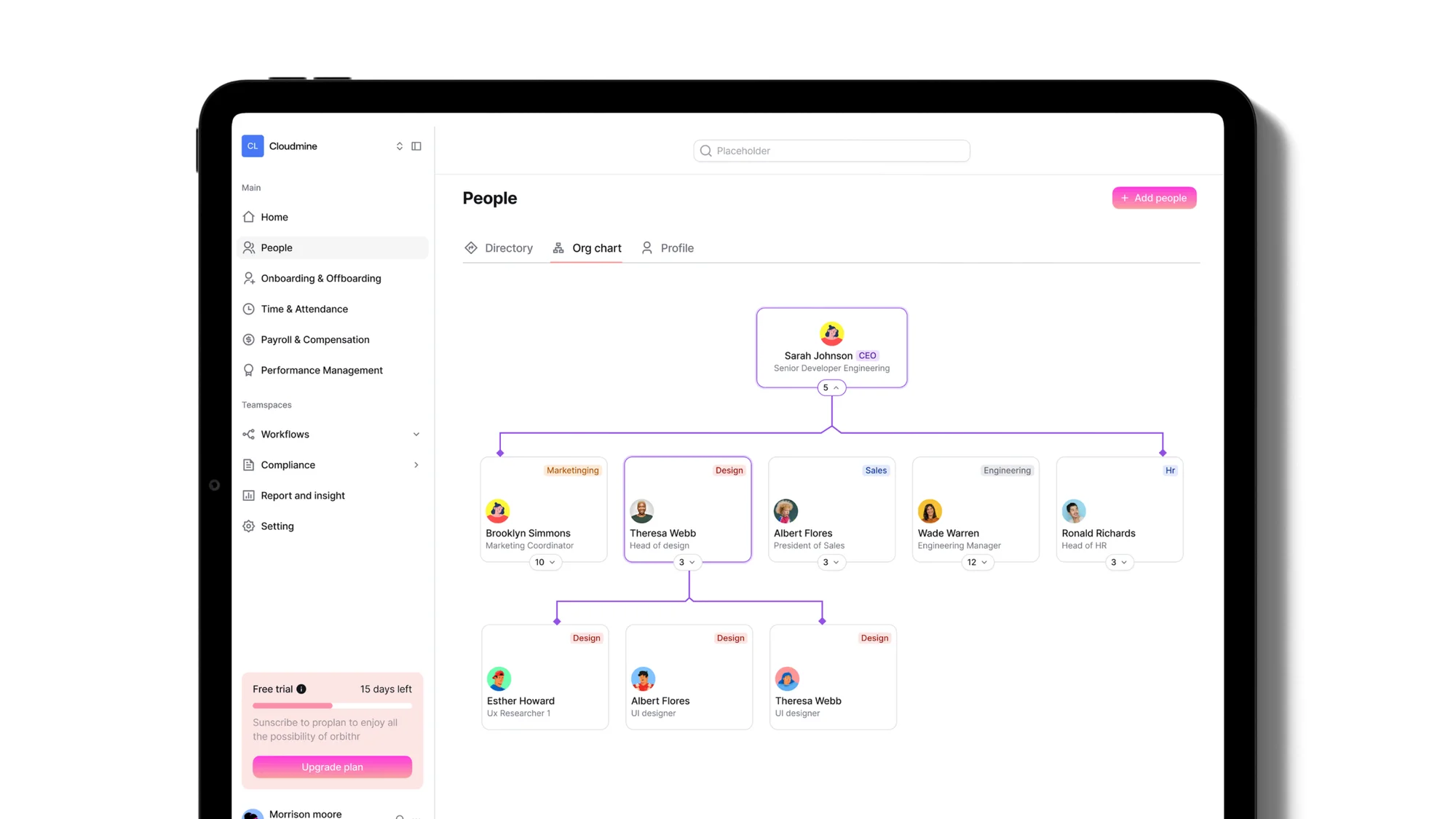
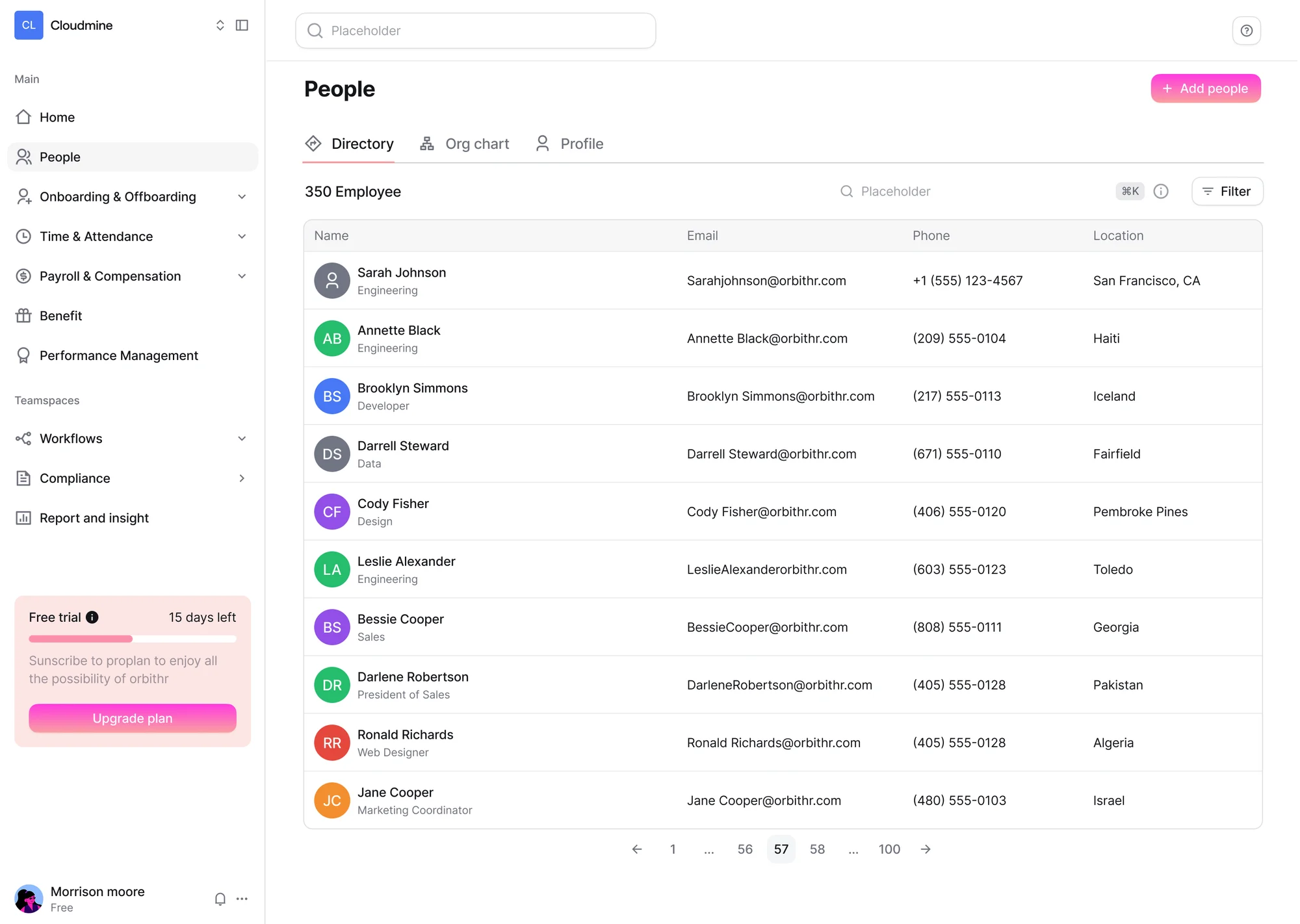
People
A single source of truth for employee information, roles, documents, compensation, skills, and employment history.
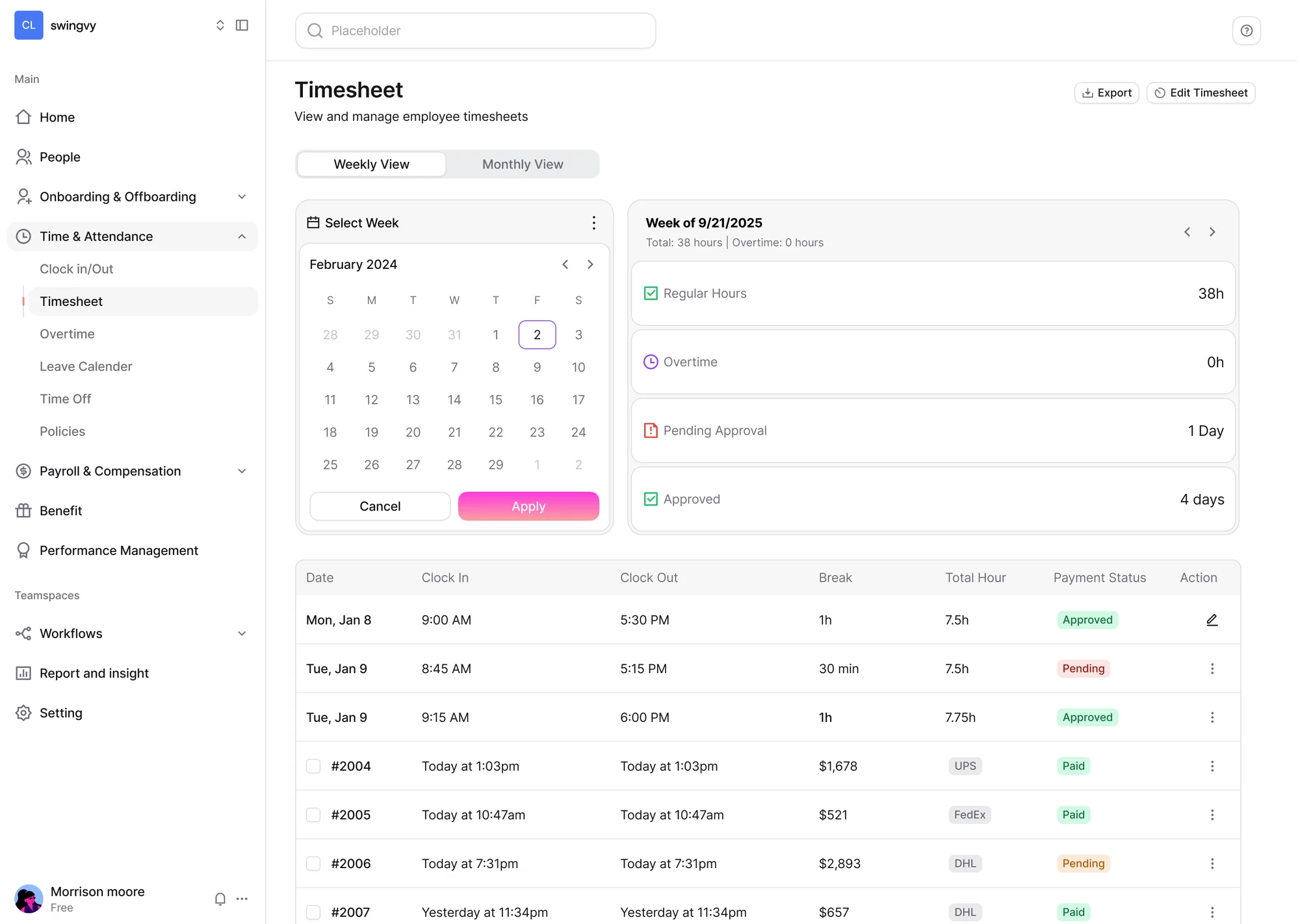
Time & Work
Connect planned schedules with actual working hours, time off, and attendance.
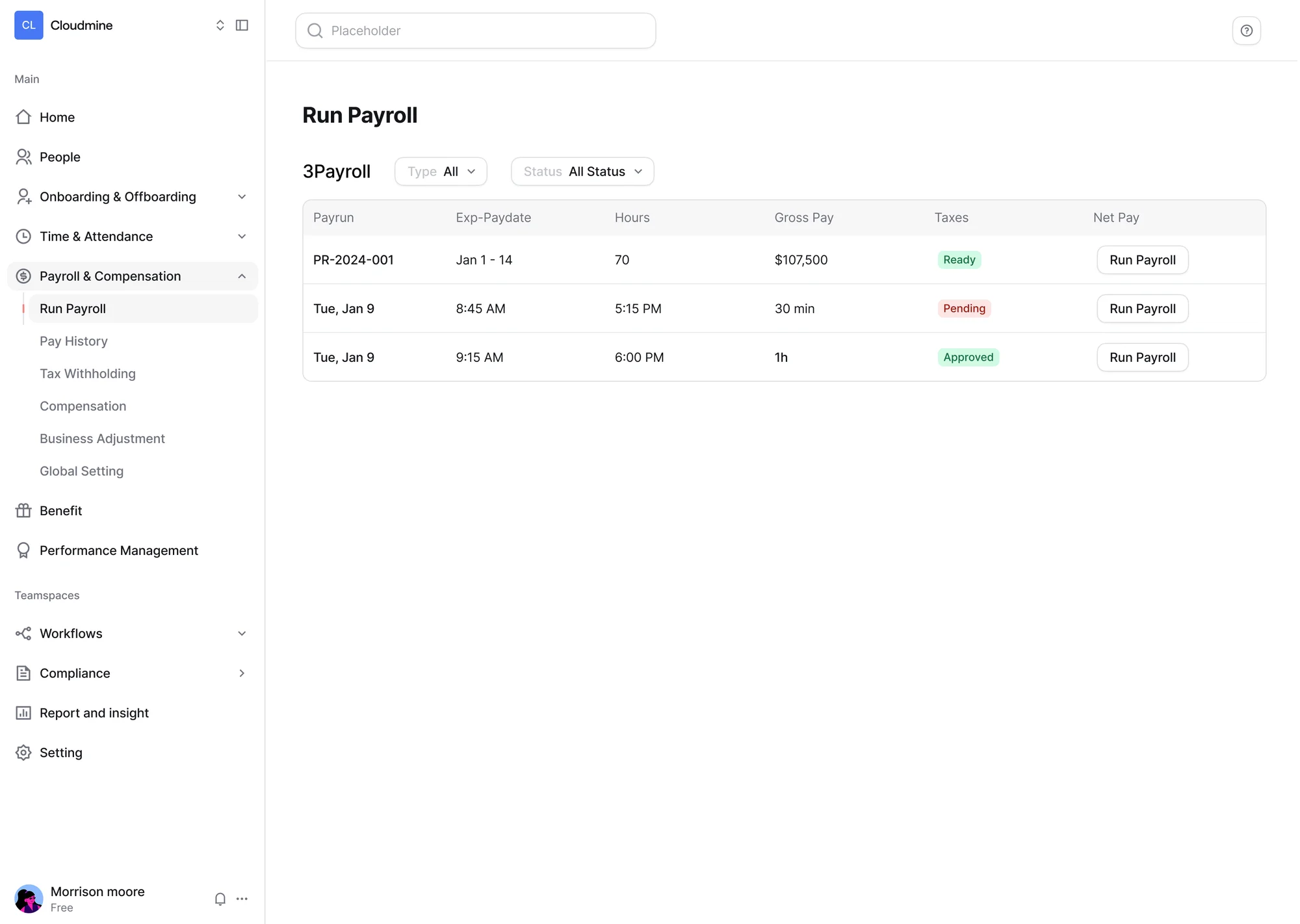
Payroll & Benefits
Give teams a clearer view of compensation, payroll, benefits, and deductions.
Learning
Designing Complexity Without Exposing Complexity. The Biggest Challenge With OrbitHR Wasn't Designing Individual Screens. It Was Creating A System That Could Support The Complexity Of HR While Still Feeling Approachable To An SMB.
Three Principles Shaped The Final Product:
The Admin And Employee Experiences Should Feel Like Different Views Of The Same System, Not Separate Products.
Conflicts, Discrepancies, And Compliance Issues Shouldn't Disappear Into The System. They Should Become Clear Tasks With A Path To Resolution.
Bulk Actions, Reusable Templates, Contextual Filters, And Workflow Automation Become Increasingly Important As A Company Grows.
OrbitHR Ultimately Became Less About Putting Every HR Feature Into One Product And More About Connecting The Moments Between Them.